
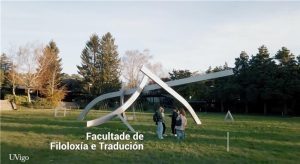
The Organizing Committee of the 13th International Conference on Missionary Linguistics invites the academic community to submit proposals for individual papers, thematic panels, and posters for the 2027 edition, jointly organized by the Faculty of Philology and Translation of the University of Vigo and the Center for Studies in Letters (CEL), based at the University of Trás-os-Montes e Alto Douro in Vila Real.
This conference continues a long-established tradition of twelve international meetings dedicated to the study of Missionary Linguistics, a series launched and continually co-organised by Otto Zwartjes. Previous editions have taken place in Oslo (Norway, 2003), São Paulo (Brazil, 2004), Macau/Hong Kong (China, 2005), Valladolid (Spain, 2006), Mérida (Mexico, 2007), Tokyo (Japan, 2010), Bremen (Germany, 2012), Lima (Peru, 2014), Manila (Philippines, 2016), Rome (Italy, 2018), La Pampa, Santa Rosa (Argentina, 2020), and Hsinchu (Taiwan, 2025). As in previous years, the conference welcomes research covering a wide range of regions, descriptive traditions, and historical periods.
Situated at the intersection of the historiography of linguistics, historical linguistics, and historical sociolinguistics, Missionary Linguistics seeks to understand how—and for what purposes—Western missionaries documented and analyzed unknown languages previously in Asian, American, and African contexts. Particularly relevant primary sources include grammars, dictionaries, teaching manuals, catechisms, and religious translations into local languages—often constituting the earliest written codifications of those languages.
The 2027 edition, under the theme “Contributions to the Safeguarding of the World’s Linguistic and Cultural Heritage,” aims to foster debate on the contemporary scientific, political, and ethical relevance of missionary materials, as well as to reflect on how these works contribute to our understanding and preservation of global linguistic heritage. We welcome proposals that examine missionary descriptive traditions, the contexts of production and circulation of metalinguistic works, their materiality, grammatical and lexicographic models, the relationships between missionaries and local communities, translation processes, and the intercultural dynamics emerging from those encounters.
Contributions are also encouraged that explore digital humanities methodologies, preservation practices, editing and cataloging of historical collections, and critical or decolonial approaches to the missionary legacy—particularly when connected to current discussions on linguistic justice and cultural diversity, including international initiatives that advocate for the recognition of linguistic diversity as a foundation for more equitable and sustainable societies.
The conference also strongly encourages the participation of early-career researchers, with the goal of promoting the renewal of the field and strengthening the international scholarly networks that have supported the growth and consolidation of Missionary Linguistics studies.
Applicants should submit an abstract of 200-300 words, including:
Provide the full title of your submission, written clearly and accurately to reflect the scope and focus of the work.
List the full name of the primary author and all co-authors contributing to the proposal.
Specify the institutional affiliation of each author, including department, research centre, or academic unit.
Select three to six keywords that best represent the topic, methodology, or disciplinary area of the study, while also, indicate whether the proposal is submitted as a paper, panel contribution, or poster presentation.

Registration takes less than 2 minutes. Reduced prices until January 31st 2027
Join the 13th International Conference on Missionary Linguistics and engage with scholars advancing research on linguistic documentation, intercultural encounters, and the preservation of the world’s linguistic and cultural heritage. Connect with an international community committed to rigorous inquiry and collaborative knowledge exchange.

13th International Conference on Missionary Linguistics: Contributions to the Safeguarding of the World’s Linguistic and Cultural Heritage
© 2026 All rights reserved